 CummingCommercial Stucco & EIFS
- Home
- Services
- DensGlass Sheathing
DensGlass Sheathing Replacement in Cumming
When water gets behind the stucco or EIFS on a Cumming building, the sheathing takes the damage first. We open the wall over the wet area, replace the board with glass-mat gypsum sheathing, and rebuild the weather barrier, flashing and finish.
- Wet sheathing removed
- Glass-mat board installed
- New barrier & flashing
- Finish matched to facade

Request a commercial quote
Cumming commercial stucco & EIFS. Property managers, boards, owners & builders.
Soft walls mean wet board behind them
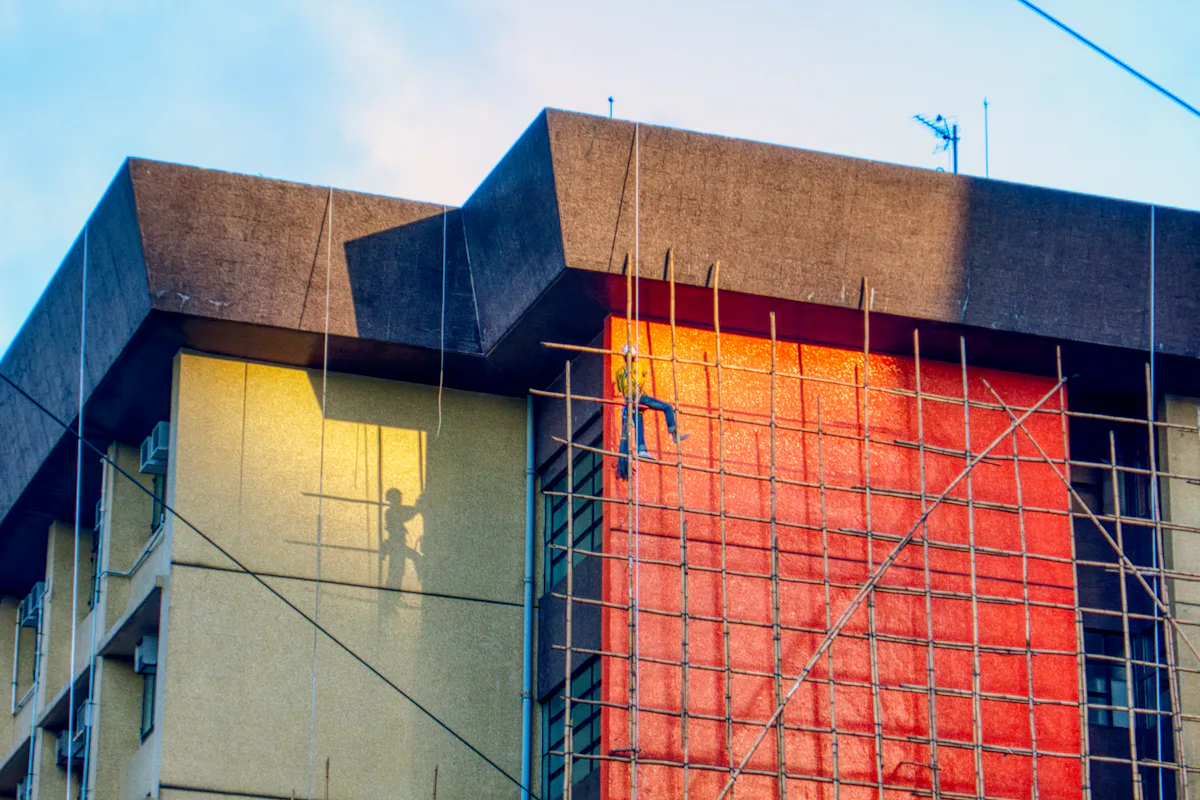
Press on a section of EIFS beside a window and feel it give, or notice a stucco wall that has bowed slightly between studs, and the sheathing behind it is almost always wet. On many commercial and multifamily buildings around Cumming, that board is OSB, plywood or paper-faced gypsum. All three lose strength when they stay damp, and the cladding in front of them keeps them from drying.
Covering that condition with a new finish does not fix it. The wet board has to come out. We use moisture readings to mark the edges of the damage, remove the cladding and sheathing back to dry material, and check the studs, plates and fasteners behind it. Damaged framing is reported to the owner before we close the wall, and termite activity is flagged as soon as we see it.
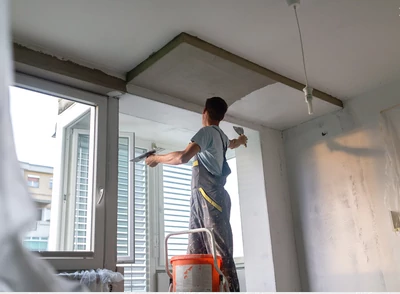
New glass-mat gypsum sheathing goes on, a weather barrier is lapped into the surrounding wall, openings are re-flashed, and the stucco or EIFS is rebuilt and finished to match. Glass-mat board does not feed mold or rot the way paper-faced and wood sheathing can, which is why we specify it.
Sheathing & substrate repairs in Cumming
The facade only tells you there is a problem. These are the layers we rebuild once a wall is open.
Water-damaged sheathing
Swollen OSB, delaminated plywood and softened gypsum board cut back to sound material and replaced with glass-mat board.
Weather-resistive barrier
New barrier lapped over the sheathing and tied into the existing barrier at every edge of the repair.
Window & storefront openings
Sill pans and jamb flashing integrated with the barrier so water that reaches an opening drains out.
Parapets & roof-to-wall joints
Flashing corrected where a roof, balcony or breezeway meets the wall, a common source of wet sheathing.
Termite-damaged substrate
Sheathing and trim damaged by termites replaced, and cladding that runs below grade corrected.
Framing documented
Corroded steel studs or decayed wood framing are photographed and referred to the owner’s engineer before the wall is closed.
Why glass-mat board goes back in
Putting new OSB or paper-faced gypsum back behind the cladding puts the same vulnerable material in the same spot on a wall that has already shown it can get wet. Glass-mat gypsum sheathing has fiberglass facings in place of paper and a moisture-resistant core, so a wet spell does not break it down or feed mold the way wood and paper can.
It is not waterproof on its own. The weather barrier, flashing and sealant joints are still what keep water out, and every replacement we do includes them. Where the sheathing is part of a building’s structural design, or where we find damaged studs, tracks or framing, the owner’s engineer specifies that repair and we rebuild the wall to it. You see photos of the open wall before anything is closed.
| Board | When it stays wet | Our approach |
|---|---|---|
| OSBCommon on older wood frame | Swells and loses strength | Cut out and replaced |
| Plywood | Delaminates over time | Replaced or per engineer |
| Paper-faced gypsum | Facing and core break down | Replaced with glass-mat |
| Glass-mat gypsumDensGlass-type board | Resists rot and mold | Installed at the repair |
| Barrier & flashingOver any board | Sheds water to the weeps | Rebuilt every time |
How a sheathing replacement runs on site
The wall is open for as short a time as possible and protected at the end of every day, with the work phased around tenants and residents.
Survey & map
We take moisture readings across the elevation to find the edges of the wet area and the leak source before any cladding comes off.
- Readings mapped on photos
- Leak source identified
- Itemized written scope
Open & replace
Cladding is removed over the damaged area, wet sheathing is cut back to sound material, and glass-mat board is installed.
- Daily weather protection
- Framing issues documented
- Changes approved first
Barrier, flash & finish
New barrier and flashing are lapped into the existing wall, then the stucco or EIFS is rebuilt and color matched.
- Barrier lapped correctly
- Flashing at every opening
- Color & texture matched
Soft or bulging areas on your facade?
The longer sheathing stays wet, the more of the wall it takes with it. A moisture survey shows how far it has gone.
Usually part of the same project
Sheathing does not get wet on its own. These services find the leak and close the wall back up properly.
Envelope Inspections
Moisture surveys, water testing and written condition reports for owners, boards, lenders and buyers.
Learn more
EIFS & Dryvit Restoration
Repair and restoration of EIFS and Dryvit facades, including recoats, joint replacement and drainable conversions.
Learn more
Condominiums & HOAs
Reserve-study repairs, balconies, sealants and full-building recoats for condominium associations.
Learn moreWhere we find wet sheathing on Cumming buildings
The pattern repeats across office, retail and apartment buildings around Cumming: the damage sits under the details, not in the middle of the wall.
Below window corners, under balcony and breezeway connections, behind parapets with flat caps and at the base of walls where grading and paving rose after construction. On apartment and condominium buildings, one leaking detail repeated across dozens of units can mean the same repair on every stack. We map readings by unit and elevation so the scope is accurate before demolition starts.
Window corners
Sheathing below window sills and beside jambs, where perimeter sealant and flashing failed.
Balconies and breezeways
Board around ledgers and slab edges on multifamily buildings.
Termite damage
Substrate and framing damaged by termites, exposed and reported before the wall is closed.
- Cumming
- Downtown Cumming
- GA 400 corridor
- South Forsyth
- North Forsyth
- Coal Mountain
- Lake Lanier
- Alpharetta
- Johns Creek
- Canton
Sheathing replacement questions from Cumming
What Cumming owners, managers and boards ask about wet sheathing behind stucco and EIFS.
What is DensGlass, and is it the same as denglass?
Do you have to remove the cladding from the whole building?
Do we need a permit to replace sheathing in Cumming?
What happens if the framing is damaged too?
Can residents or tenants stay in the building?
How is sheathing replacement priced?
Find out what’s behind the wall
Tell us where the facade feels soft or shows stains. We will survey the building and put the repair in writing.